Sustainability Report 2025
A letter from the Executive Chairman
We have built our sustainability program with discipline and intent, guided by a clear set of focus areas which we’ve refined over the years: Climate, People & Culture, and Good Governance.
Our commitment to these core priorities has not wavered, even as the world around us continues to shift. This enduring focus is, I believe, a testament to the firm’s consistency and long-term perspective. We remain focused on evidence and experience, confident that a consistent, long-term approach best serves our clients, investments, and stakeholders.
With a long-term mindset, willingness to adapt and the trust of our investors and shareholders, I am confident that Investcorp will remain a leader in responsible investment – delivering resilient value for years to come.
Mohammed Alardhi
Executive Chairman
Highlights
72%
average score (4/5 stars) achieved across all modules in latest PRI assessment
27%
of total energy consumption from renewable or low-carbon sources
85%
of senior role changes filled by homegrown talent
>80%
of employees using training platform to develop professional skills
7%
year-on-year decrease in total number of flights taken for business travel
Top 10
Forbes Middle East Sustainability Leaders for the third year in a row
Focusing on what matters most
Our sustainability efforts are guided by input and feedback from all our stakeholders, including our clients, employees, shareholders, regulatory bodies, lenders and our Board of Directors.
We continually consult our core stakeholders on their views and expectations and strive to consider multiple views when establishing our sustainability policies, practices and reporting methodologies.

Climate action
We support the transition to a net zero economy through our investments, portfolio companies and across our own operations.

People and culture
We advocate for more representative and inclusive work environments and support the health, wellbeing and educational advancement of our communities.

Good governance
We build high performing businesses through good governance measures including robust data protection and cybersecurity protocols.
Our principles
Our principles guide everything we do in pursuit of our objective to provide clients with the best investment products and solutions for their needs.

Global outlook
We see opportunity in the major markets where we operate. We provide the local insight needed to understand and leverage every meaningful investment idea for our clients.

Lasting partnerships
Our business is built on the highest level of service. We nurture strong, enduring relationships with our clients and with the management teams we invest in.

Entrepreneurial spirit
We are aligned with our clients. As a principal investor in many ideas, we will often deploy our capital before we offer the opportunity to our clients.

Sound judgement
We are an institution with four decades of experience. We draw on our knowledge to make well-informed decisions in the pursuit of strong and sustained returns.
Sustainable investing
Sustainable investing highlights

Climate
Developing in-house tools to support climate due diligence
We continue to deepen our understanding of climate risks, covering both physical hazards and transition drivers.
Phase 1 of our approach to managing climate risks focused primarily on transition risks associated with our operations and investments, through structured programs to assess carbon footprints for our corporate activities and our emissions-intensive portfolio companies. While this remains important, the next phase of our climate program will further consider resilience to physical risks across our investments and operations.
CLIMATE RISK TOOL (CRT)
Consideration of climate-related risks requires tools and processes that support investment diligence. To address this, we developed an internal tool that will be made available to all Private Equity investment teams following a pilot phase, providing a consistent approach for screening of climate-related risks.
The tool is designed to be used during initial assessments, drawing on credible public datasets related to climate exposure and vulnerability. Inputs are calibrated to our use case to help form an early view of potential climate risk exposure for each asset.
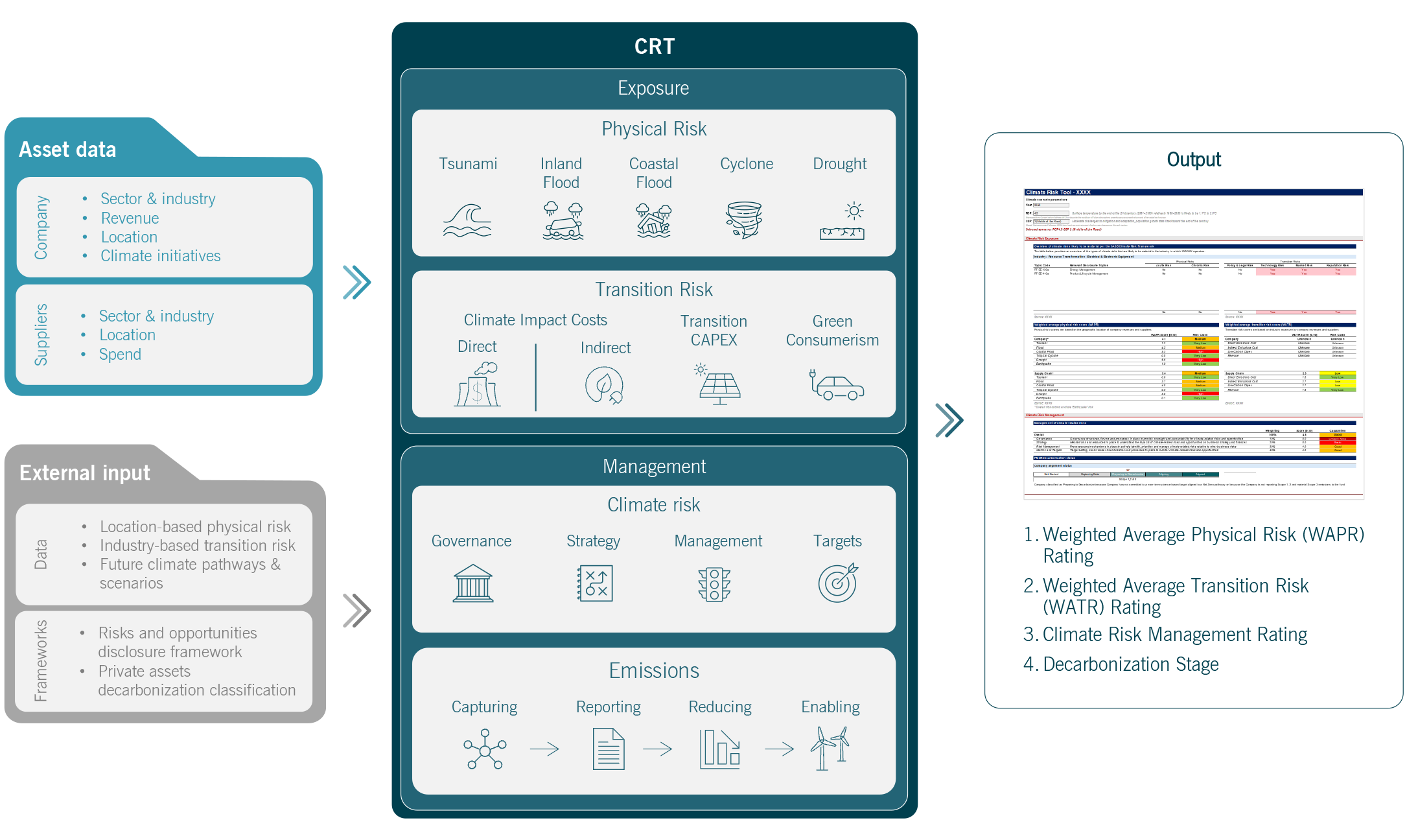
Designed for practicality, the tool requires minimal inputs, delivers rapid indicative outputs, and integrates seamlessly into existing workflows – allowing teams to apply it early in the investment process where relevant to do so. Investment teams can prioritize issues and determine where deeper analysis is needed, including engagement with third-party advisors when appropriate.

People and Culture
Advancing shared ownership in middle market private equity
In November 2024, Investcorp’s Strategic Capital Group (ISCG) partnered with Ownership Works, a nonprofit dedicated to expanding employee ownership in the private sector. As the first GP-staking partner of Ownership Works, ISCG is pioneering a model of sustainable value creation that aligns the interests of investors, companies, and employees.
This collaboration underscores ISCG’s commitment to bring institutional tools traditionally associated with large-cap firms to middle-market GPs. As private equity evolves beyond the era of pure financial engineering, GPs are increasingly turning to operational levers to drive value. Shared ownership remains a powerful yet underused tool in the middle market.
Through this partnership, ISCG and Ownership Works provide frameworks and implementation support to help private equity GPs embed these shared ownership programs across their portfolios. These programs are designed to align employee and investor interests, foster stronger performance cultures, and enhance GP differentiation in an increasingly competitive landscape.

Governance
Sustainability integration in the investment process, updated for today’s market
In late 2024, we launched an initiative to review our existing policies, focusing on four key questions:
- What is best practice? We benchmarked peers, consulted industry associations, and engaged our broader network to identify emerging standards.
- What do investors want? We reviewed past due diligence questionnaires, investor meeting notes, and consulted our capital raising teams to understand disclosure preferences and priorities.
- What is practical? We engaged investment teams, operating partners, and drew on day-to-day portfolio engagement to calibrate a pragmatic approach.
- What does the Firm need? We worked with Internal Audit to identify critical controls, aligned with Investment Risk on lifecycle interactions, and ensured consistency with the Firm’s overall strategy.
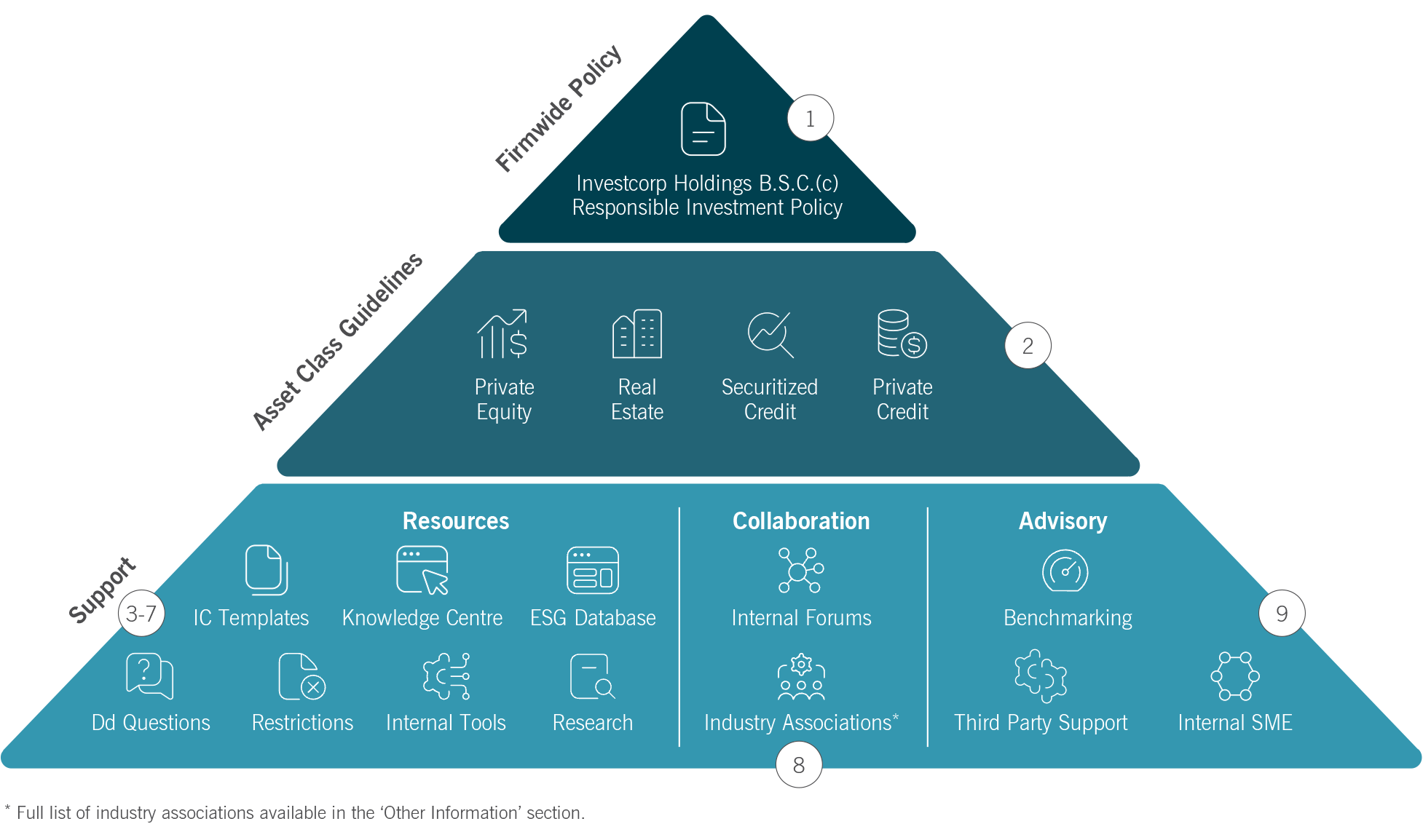
OUR UPDATED POLICY SUITE
We are working with each investment team to embed the suite consistently and to measure adoption through our regular governance processes. Collectively, these updates aim to improve clarity, strengthen accountability and make sustainability integration more decision useful.
-
- Firmwide Responsible Investment Policy brought in line with current industry best practice and remains publicly available on our website.
- Existing procedures and guidelines for each core asset class updated to clarify process and expectations, including improved guidance on reporting, significant-incident escalation, and documentation of sustainability-related initiatives.
- Standardized Investment Committee (IC) templates for Private Equity, Real Estate and Private Credit introduced across geographies to support consistent consideration of sustainability factors.
- Proprietary tools using publicly available datasets developed to provide clear, decision-useful insights within pre- and post-acquisition.
- Sample due diligence questions against our core focus areas provided to help teams scope work with third-party advisors.
- Investment Restrictions Framework revised for relevant LOBs, clearly defining prohibited activities, revenue thresholds, and escalation requirements.
- Refreshed knowledge hub consolidates all policies, tools, templates, and case studies in one accessible location, making it easier for teams to apply the updated framework in practice.
- Industry associations participation and internal forums foster stronger collaboration and promotes knowledge sharing across teams and geographies.
- Internal and external subject matter experts (SMEs) and advisors, complemented by access to benchmarking capabilities to compare performance.
Governance
Utilizing industry associations to improve practices
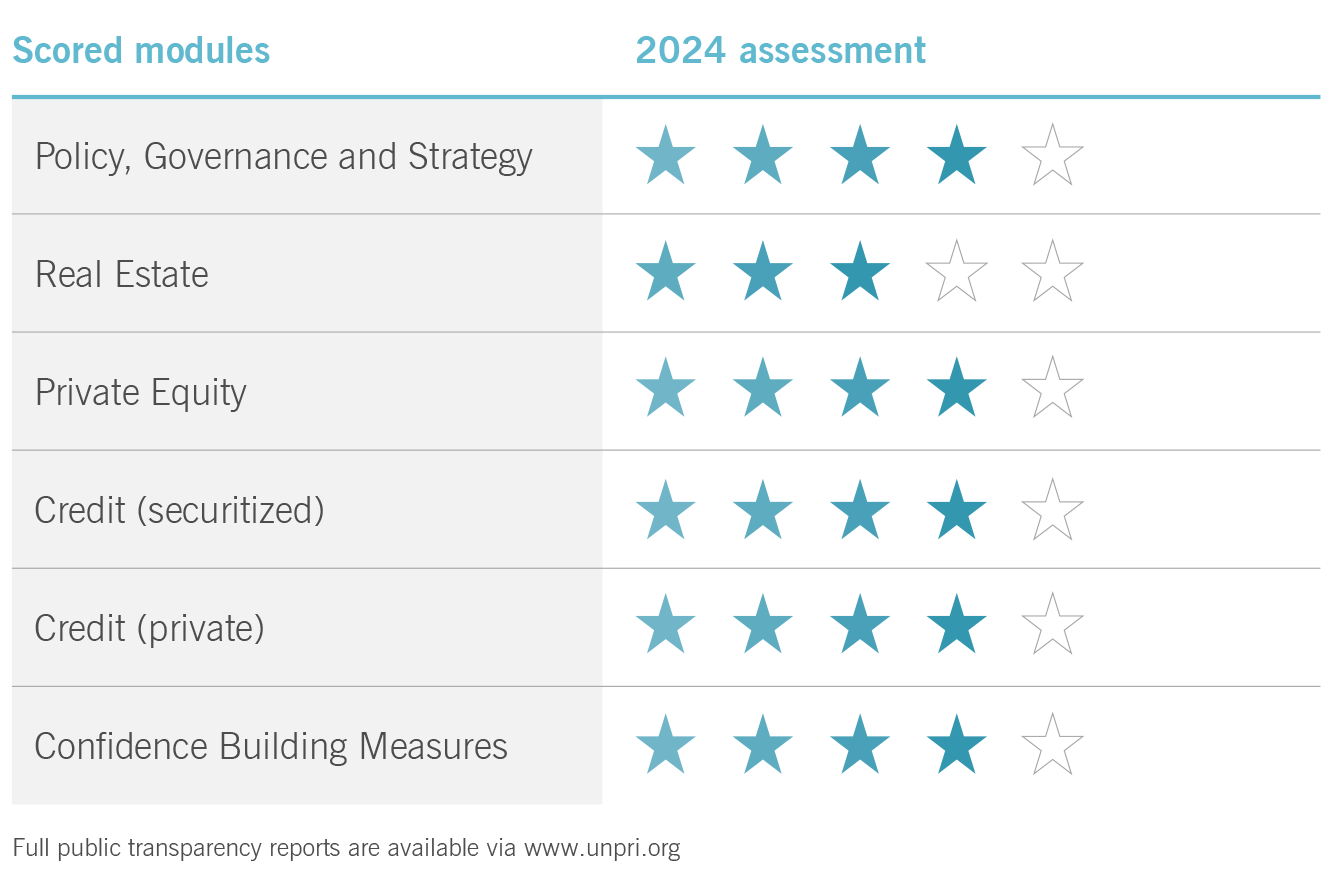
Since 2021, Investcorp has been a signatory of the United Nations Principles for Responsible Investment (UN PRI), formalizing a commitment to responsible investment that has been part of our Firm’s approach for over four decades.
This alignment reflects both our investor’s expectations for high sustainability standards and our strategic intent to benchmark against global best practices. In addition to leveraging resources from other industry associations we are members of, we apply the PRI framework to evaluate and strengthen our approach across all core investment lines – Private Equity, Real Estate, and Credit (both securitized and private) – as well as firmwide policy, governance, and strategy. Our latest disclosure highlights progress and consistency across reporting modules, with most scores exceeding the PRI median and an average increase of 2 percentage points compared to the previous reporting period.




Corporate sustainability
Sustainability starts within
Climate
Following our decarbonization commitment in late 2023, we moved quickly to develop a practical plan
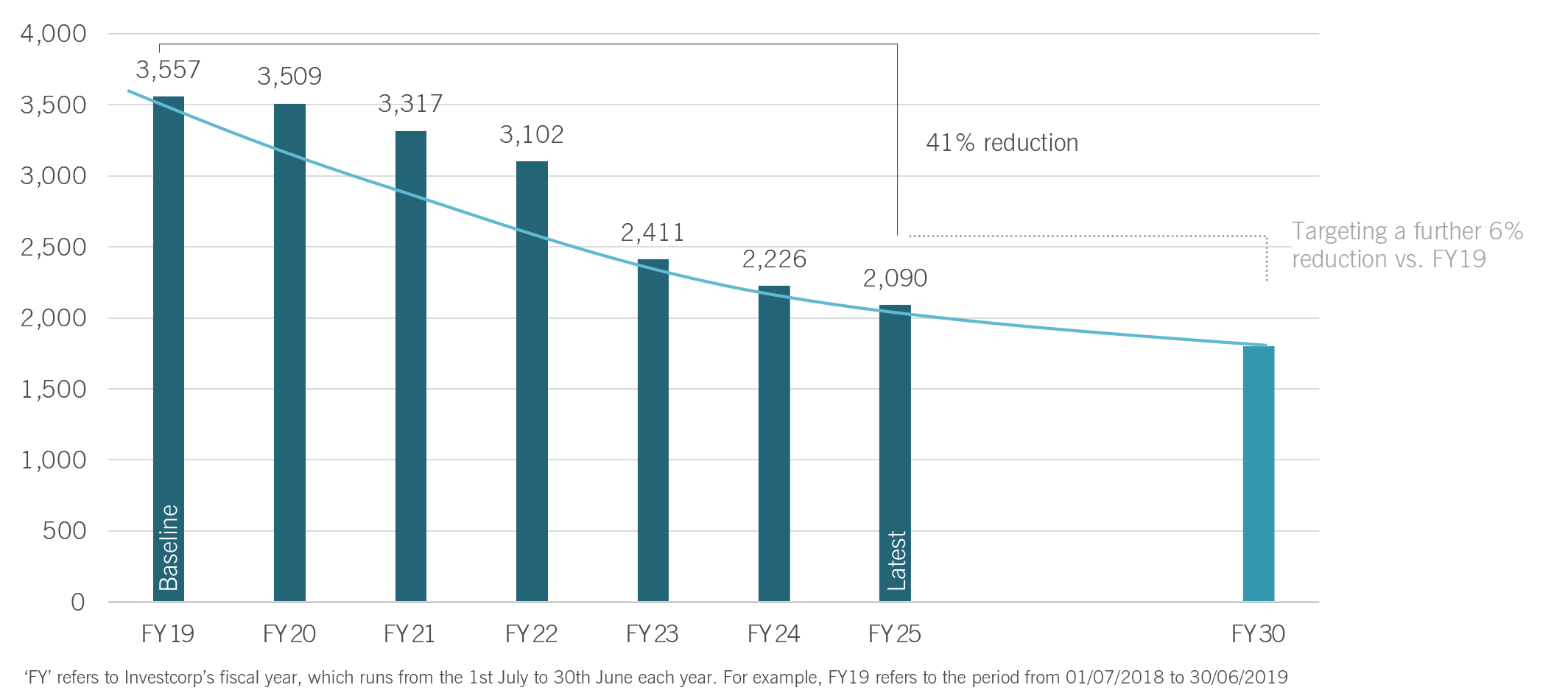
In early 2024, we shared the first version of our climate strategy with the Firm’s senior leadership, setting an interim operational emissions target for 2030 (covering Scope 1 and 2). The strategy outlined key levers to help meet our corporate emissions goal and stay on track for our long-term target by mid-century.
Our latest emissions inventory, published in January 2025 for FY24, showed an 8% year-on-year reduction – driven primarily by a 40% drop in Scope 1 emissions. Overall, emissions are down 37% from our FY19 baseline, with 10% remaining to meet our 2030 target. While the FY25 inventory is still in progress, preliminary data indicates a decline in energy consumption across Scope 1 and 2 sources, suggesting continued momentum toward our goal.
These results are encouraging, but we recognize that much of the progress to date reflects early wins – efficiency improvements and clean energy transitions. Achieving further reductions will require addressing more complex challenges in the years ahead.
We will use data we’ve gathered to date to review and refine our climate strategy. This includes reassessing our overall commitment, mapping initiatives to meet our interim operational emissions target, and further developing our approach to financed emissions – our most material Scope 3 category and a key lever in our decarbonization efforts.
We will use data we’ve gathered to date to review and refine our climate strategy. This includes reassessing our overall commitment, mapping initiatives to meet our interim operational emissions target, and further developing our approach to financed emissions – our most material Scope 3 category and a key lever in our decarbonization efforts.
People and Culture
Empowering our people
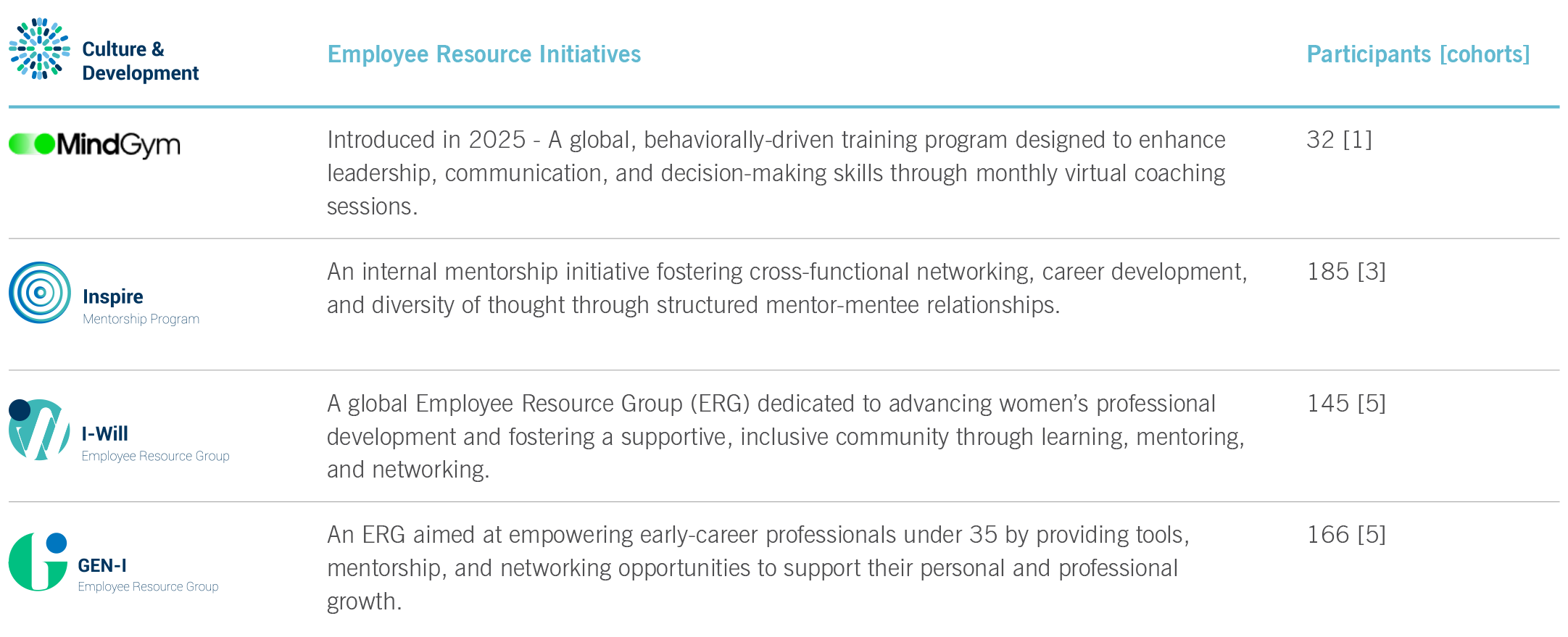
Our people are the foundation of our success. By prioritizing their growth and well-being, we are building a resilient organization and securing our long-term future. For over four decades, our diverse culture has been an enabler to our performance – fostering an environment where individuals feel empowered to share their backgrounds and ideas, knowing their voices are respected and reflected in decision-making.
As we’ve grown into a global asset manager with more than 480 employees across 14 offices, we recognize the importance of actively preserving and evolving our culture. Our commitment goes beyond inclusion – we invest in our people through meaningful development opportunities, mentorship, and support. By nurturing talent and embracing diversity, we continue to strengthen our teams, empower future leaders, and positively impact the communities we serve.
Good Governance
Our communities
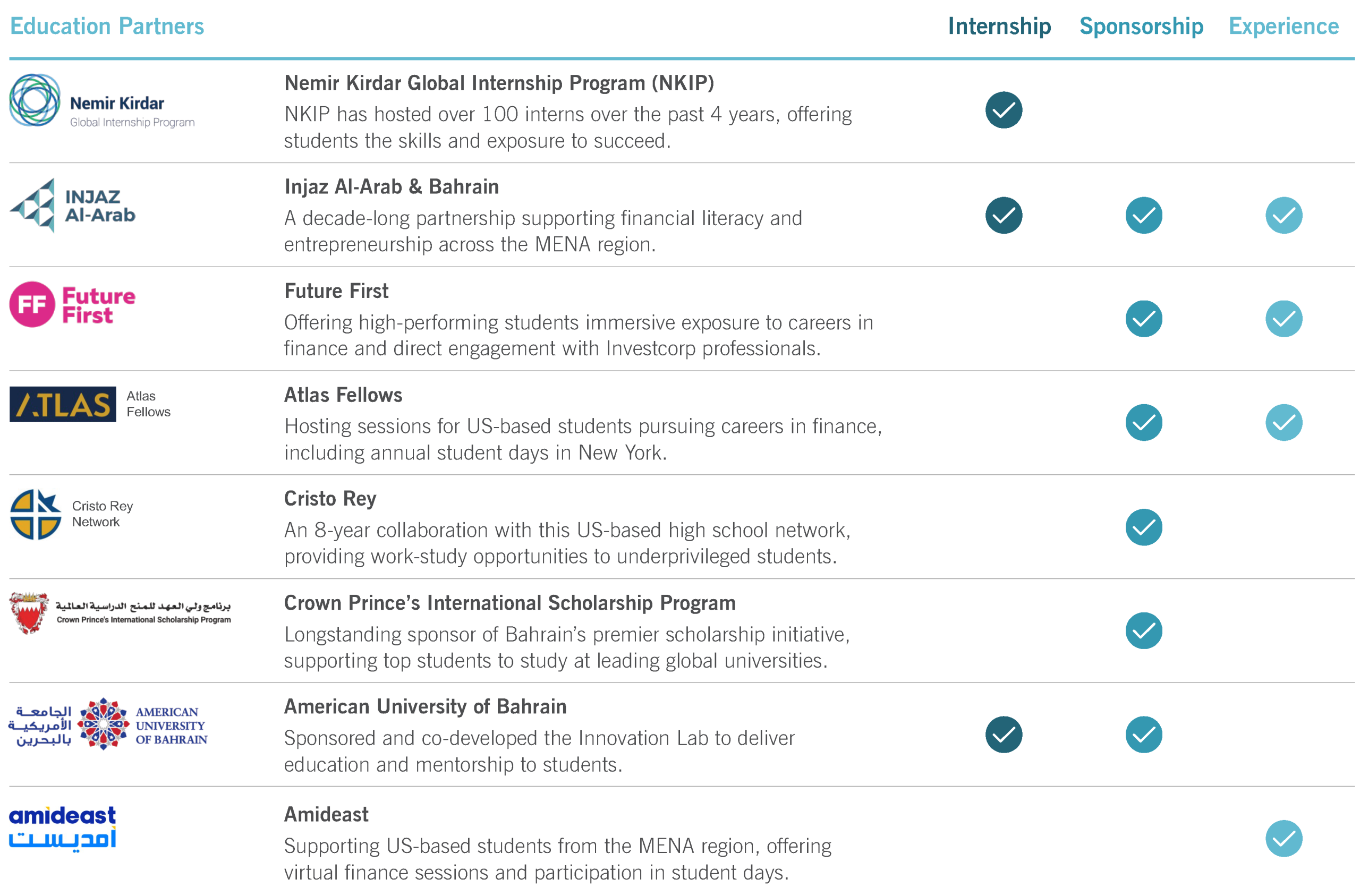
We are committed to the communities where we operate and take pride in our ability to give back. Our efforts focus on advancing education – where we believe we can create the most lasting and meaningful impact.
We have a proven track record of forming strategic education partnerships that empower the next generation of leaders. We’ve seen the positive impact of our long-standing support for both global and regional programs – with more than 180 students supported to date – and we continue to prioritize initiatives that advance educational access and achievement in the communities where we operate.